Fix How Mistakes in 15 Minutes With 3 Quick Drills
Fix How Mistakes in 15 Minutes With 3 Quick Drills

“How” primarily means “in what way or manner, to what extent, or in what state,” and it works mainly as an adverb, occasionally as a conjunction, and rarely as a noun. Say it as /haʊ/, one syllable, rhyming with “cow” or “now.” Native speakers use it dozens of times a day without thinking twice, but its grammar hides a few traps that trip up even confident English learners.
TL;DR:
- “How” cannot modify a noun directly; replace it with “what” when asking about a noun’s property or characteristic.
- In indirect questions, “how” maintains statement word order, while direct questions invert the subject and verb.
- The most common mistake is mixing up “how” and “what,” especially in questions about color or other nouns, leading to ungrammatical forms.
- Practice with interleaved drills and spaced repetition enhances mastery of correct “how” usage and reduces frequent errors.
- “How” originates from Old English “hū,” sharing roots with “who” and “what,” and has stayed tied to manner and degree rather than replacing nouns.
Table of Contents
- Definitions and Grammatical Roles of “How”
- How Do You Pronounce “How”?
- Common Sentence Patterns Using “How”
- Grammar Pitfalls: “How” vs “What” and Word Order
- Where Did “How” Come From?
- A Fast Practice Routine for Mastering “How”
- Why Small Words Like “How” Decide Big Outcomes
- Sources
Definitions and Grammatical Roles of “How”
Most dictionaries split “how” into three jobs, and knowing which one you’re using clears up almost every mistake tied to this word.
As an adverb, “how” does the heaviest lifting. It asks about manner (“How did you fix the leak?”), degree or extent (“How tall is he?”), or condition (“How was the flight?”). Less commonly, it stands in for “why” in older or more formal phrasing, as in “How can you say that?” Merriam-Webster’s entry lists all of these senses with usage notes worth skimming once.
As a conjunction, “how” links a main clause to an embedded question about manner or method, usually inside indirect speech: “She explained how the engine works.” Notice the word order stays statement-like (subject before verb) instead of flipping into question form. Collins English Dictionary covers this construction in detail, including why it’s a favorite in reported speech.
As a noun, “how” shows up only in fixed, informal phrases, almost always paired with its cousin “why”: “We covered the hows and whys of the merger.” You won’t use “how” as a standalone noun outside expressions like this one.
- Adverb (manner): “How do you make sourdough rise?”
- Adverb (degree): “How much does it cost?”
- Conjunction: “I never learned how she convinced him.”
- Noun: “The hows and whys still matter.”
How Do You Pronounce “How”?
“How” is pronounced /haʊ/, a single syllable built on the diphthong /aʊ/, the same vowel glides you hear in “now,” “cow,” and “brow.” Start with an open “ah” sound and slide your mouth toward a rounded “oo,” letting the “h” push a light breath out front. There’s no meaningful pronunciation split between General American and Received Pronunciation here, unlike words such as “dance” or “water.” Cambridge Dictionary’s audio clips let you compare a few regional voices side by side if you want to hear it in different accents.
Practice cue: Say each of these aloud, slowly at first: “How are you?” “How much?” “How strange.”
- IPA: /haʊ/
- Rhymes with: cow, now, brow
- Syllables: one
- Stress: always stressed (it’s a content word carrying real meaning)
Common Sentence Patterns Using “How”
“How” shapes five recognizable sentence types, and once you can name the pattern, building your own sentence gets a lot faster.
- Direct questions. The classic form: “How + auxiliary verb + subject?” as in “How do I get to the station?” or the everyday greeting “How are you?”
- Indirect questions. Word order flattens back to statement order: “I asked how she did it,” not “I asked how did she do it.” This is one of the most common errors among intermediate learners, and Collins’ grammar notes flag it directly.
- Exclamations. “How + adjective/adverb + (subject + verb)!” builds emphasis: “How beautiful!” or “How quickly he finished!” This differs from “what” exclamations, which need a noun (“What a mess!” not “How a mess!”).
- Suggestions with “how about.” “How about we grab lunch first?” softens a suggestion into a question, useful in both casual and semi-formal talk.
- Informal reasoning with “how come.” “How come you’re late?” means the same as “Why are you late?” but sounds noticeably more casual, so save it for friends, not job applications.
Idioms round out the picture: “How do you do?” is a formal greeting exchanged on first meeting someone, while “How’s it going?” is its relaxed, everyday cousin. You’ll also hear “how so?” as a quick request for someone to justify a claim they just made. If you want to see how these patterns hold up in real conversation, worked interview question examples show “how” carrying a lot of the interviewer’s phrasing.
Grammar Pitfalls: “How” vs “What” and Word Order
The single biggest error learners make is trying to use “how” where “what” belongs. “How” cannot modify a noun phrase directly. You say “What color is the car?” not “How color is the car?” because “how” attaches to adjectives, adverbs, and verbs, not nouns. Collins’ entry on this restriction is worth reading closely, since it’s the rule that trips up even advanced speakers translating from languages where the equivalent word behaves more flexibly.
Word order is the second trap. Indirect questions and embedded clauses keep statement order (“I don’t know how he did it”), while direct questions invert the subject and verb (“How did he do it?”). Mixing the two inside one sentence is the most common error a grammar-check tool will flag.
Register matters too. “How do you do?” belongs to formal introductions; “How’s it going?” fits casual chats among peers. Using the formal version at a barbecue sounds stiff, and the casual version in a courtroom sounds careless.
- Never pair “how” directly with a noun; swap in “what.”
- Keep subject-verb order intact in indirect questions.
- Match formality to the setting before choosing a greeting form.
Pro Tip: Before sending or saying a sentence with “how,” ask yourself one question: am I modifying a noun? If yes, replace “how” with “what.” That single check catches the most common mistake instantly.
Where Did “How” Come From?
“How” traces back to Old English “hū,” itself rooted in a broader family of interrogative words shared across Proto-Indo-European languages, the same ancestral branch that gave English “who” and “what.” That shared root explains why these three words behave similarly in questions yet split into different grammatical lanes: “who” and “what” act as pronouns that can stand in for nouns, while “how” stayed tied to manner and degree, never a noun-replacer.
- Old English form: hū
- Related interrogatives: who, what (shared Proto-Indo-European ancestry)
- First recorded use: documented in Old English texts predating Middle English
Merriam-Webster’s etymology notes trace this lineage in more depth if you want the full historical chain.
A Fast Practice Routine for Mastering “How”
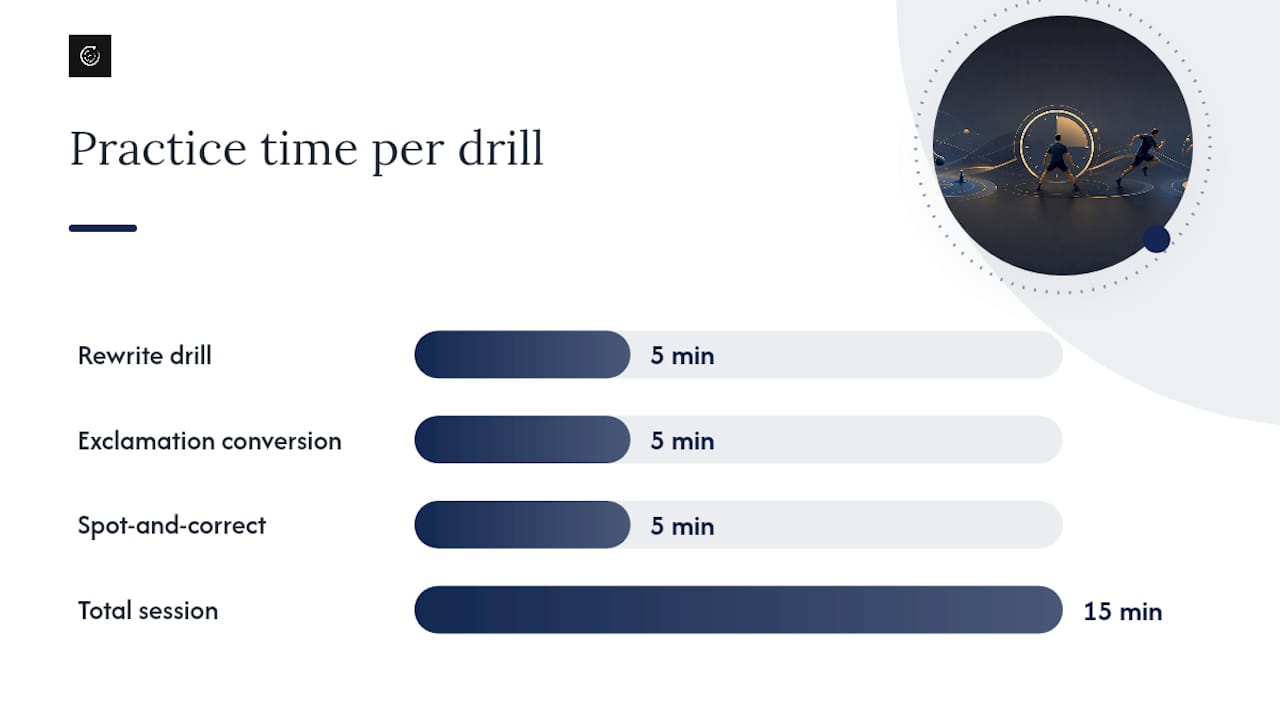
Reading definitions won’t fix a habit. Testing yourself will. Three short drills, done consistently, beat hours of passive review.
- Rewrite drill (5 minutes). Take five statements and turn them into direct questions using “how”: “The cake rose because of yeast” becomes “How did the cake rise?”
- Exclamation conversion (5 minutes). Turn five plain sentences into “how” exclamations: “The view is amazing” becomes “How amazing the view is!”
- Spot-and-correct (5 minutes). Find five sentences online that misuse “how” for “what,” then fix them.
This works because active recall forces your brain to reconstruct the rule instead of just recognizing it, and mixing the three drill types (interleaving) rather than repeating one drill five times builds more flexible memory. A 2008 study by Kornell and Bjork found learners using mixed practice scored 59% on a later classification test versus 36% for those who drilled one category at a time. Space your sessions across a day, three days, and a week later, following the pattern outlined in research on retrieval practice and spacing, and you’ll retain the pattern far longer than a single cram session would give you. A structured spaced repetition schedule makes this easy to automate rather than track by memory.
Pro Tip: After each drill, sit quietly for 10 to 15 minutes without new input, no phone, no reading. That short rest window helps your brain consolidate what you just practiced.
Why Small Words Like “How” Decide Big Outcomes
Function words get dismissed as filler, but they’re often the difference between a question that lands and one that confuses the listener. In an interview, a poorly phrased “how” question (“How was your experience like?”) signals imprecision before you’ve said anything substantive about your actual skills. Fixing grammar at this level isn’t about sounding academic. It’s about removing static so your real answer gets heard clearly. If you’re prepping for a conversation where every sentence counts, running mock questions through Iteration’s ranked practice tool can show you exactly where your phrasing loses precision.
Try the five minute daily drill above for one week. Small words compound faster than people expect.
— Iteration
Sources
- HOW Definition & Meaning - Merriam-Webster
- HOW definition in Collins English Dictionary
- Interleaving study (Kornell & Bjork) — classification task
- Retrieval practice and spacing effects — review (PMC)