Interview Practice Games That Actually Sharpen Your Answers
Interview Practice Games That Actually Sharpen Your Answers
The fastest way to improve interview performance is repeated, gamified practice that forces you to speak, defend, and revise answers under pressure. Not silent flashcard review. Not a list of “top 50 questions” you read once and forget. Real gains come from recorded, timed practice with realistic follow-ups and drills targeted at your actual weak spots.
If you only take a few features seriously when picking interview practice games, make them these:
- Voice or video input, so you hear your own filler words and pacing problems
- Follow-up questions generated from your own answers, not scripted from a generic bank
- Targeted drills built from your weakest responses, not random review
- Feedback within minutes, not days
- A visible timer that recreates real interview pressure
This guide walks through the game formats that map to specific interview skills, how to run them solo or with a group, what the evidence says about why gamification works, and how a platform like Iterationinterview puts these mechanics together.
Key Takeaways
Gamified, recorded practice with realistic follow-ups builds interview skill faster than passive review because it forces clarity, pacing, and defensible answers under real pressure.
| Point | Details |
|---|---|
| Match format to skill gap | Use arena games for pressure, boss levels for weak spots, role-play for judgment calls. |
| Record every session | Voice or video capture reveals filler words and pacing issues text prep hides entirely. |
| Score on four dimensions | Rate clarity, relevance, confidence, and technical depth after every practice round. |
| Debrief and drill immediately | Name one strength, one fix, and assign a targeted drill before the transcript goes cold. |
| Try a platform built on these mechanics | Iterationinterview pairs ranked leaderboard games with AI feedback and drills from your weak answers. |
Table of Contents
- What Types of Interview Practice Games Actually Build Skill?
- How Do You Run an Effective Practice Session?
- Does Gamified Interview Practice Actually Work?
- How Iterationinterview Applies These Game Mechanics
- Why Making Practice Fun Is the Part That Sustains It
- Try Iterationinterview’s Ranked Practice and Review
- Frequently Asked Questions
- Sources
What Types of Interview Practice Games Actually Build Skill?
Not all interview games train the same muscle. Picking the right format for the skill you’re missing matters more than logging more hours.
-
Arena or battle-royale formats. These put you against a clock and, often, other candidates answering the same prompt. Arena-style games record your response to a behavioral prompt in real time and return AI-generated feedback across dimensions like clarity and confidence shortly after you finish. The pressure is the point. It trains improvisation and forces you to compress a rambling story into a tight, structured answer.
-
Boss-level progression. Think of this like leveling up in a video game: early rounds are easy warmups, later rounds deliberately target your weakest response category. Platforms that use structured game mechanics like staged difficulty and streaks are reported by developers to improve candidate confidence handling stress-test questions compared to static prep.
-
Timed rapid-fire. Short clocks, usually 30 to 60 seconds, force you to lead with the point instead of burying it in a monologue. This is the format for candidates who ramble.
-
Role-play and scenario simulations. These mimic a real interview panel and often teach the STAR method (situation, task, action, result) as the answer skeleton. Interview simulation games use feedback loops and repeated exposure to build both structure and confidence, and they’re the best format for negotiation, conflict, and edge-case questions where judgment matters more than recall.
-
Solo AI drills with follow-ups. You answer, the system asks “why,” “what would you do differently,” or “walk me through the numbers.” This is where most candidates get caught flat, because a rehearsed story rarely survives a second question.
-
Classroom and peer-play variants. Career centers and instructors use group activity lists that pair students up for mock interviews with structured debrief templates, which scale well for a classroom of 20 without a coach for each person.
Pro Tip: If you only have time for one format this week, pick whichever one exposes your weakest skill, not the one that feels most comfortable. Comfortable practice rarely changes anything.
How Do You Run an Effective Practice Session?
Setup takes five minutes; skipping it is why most practice sessions produce no measurable improvement.
- Pick a role and industry so questions match the job you’re actually targeting.
- Set a timer between 30 and 180 seconds depending on the question type. Behavioral questions need more room than rapid-fire ones.
- Turn on recording, voice or video, every single time. You cannot fix a pacing problem you never heard.
- Choose a scoring rubric before you start, not after.
- Answer, then immediately request or generate a follow-up question tied to your own response.
A simple rubric covers four dimensions:
- Clarity: Did the answer have a clear beginning, middle, and end, or did it wander?
- Relevance: Did you actually answer the question asked?
- Confidence: Filler words, pacing, and vocal steadiness under pressure.
- Technical depth: For role-specific questions, did you show real expertise or vague gestures at it?
After each round, run a short debrief: name one strength, one improvement, and one drill to assign yourself before the next session. Pull a specific line from your own transcript as evidence rather than relying on a gut feeling about how it went.
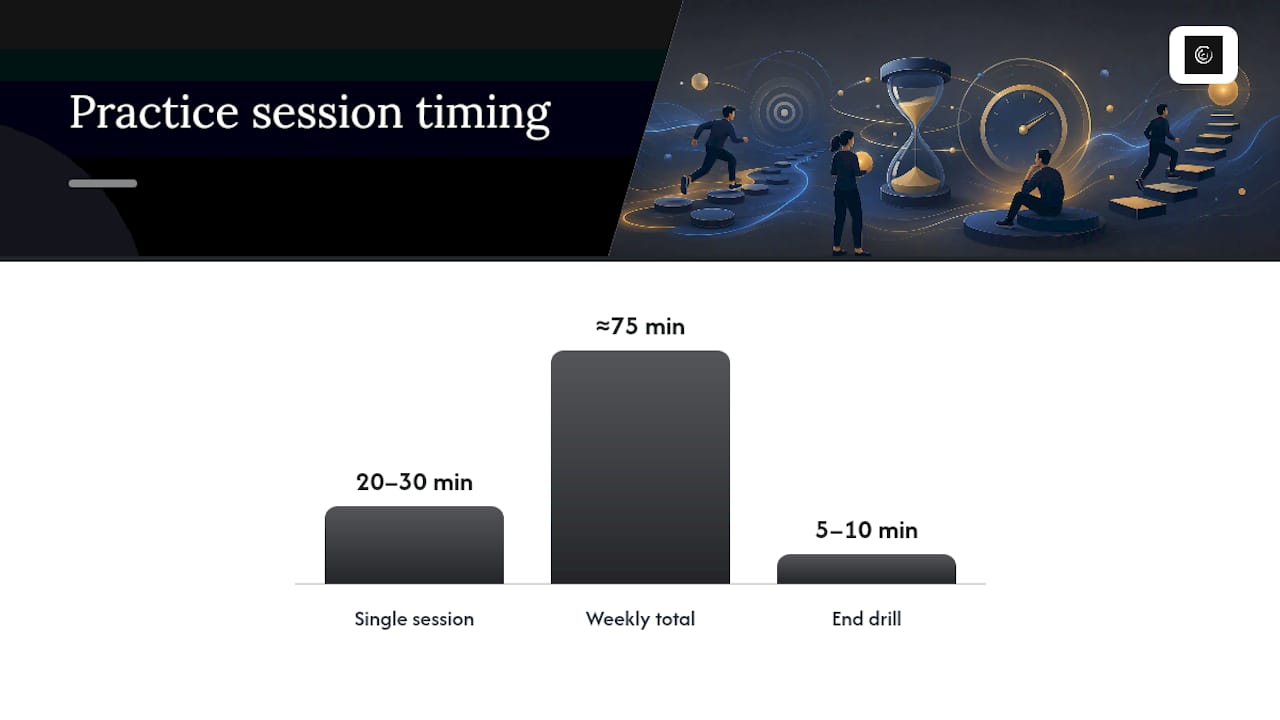
A workable cadence is three sessions a week, 20 to 30 minutes each, rotating formats so you’re not always practicing the same skill. End every session with one prescribed drill targeting whatever scored lowest.
Does Gamified Interview Practice Actually Work?
The mechanics behind interview games aren’t decoration. They’re doing specific work on anxiety and retention.
Structured game mechanics such as boss battles, leaderboards, and streaks correlate with candidates reporting higher engagement and more confidence handling stress-test questions compared to static flashcard review. Developer accounts from arena-style tools back this up qualitatively: real-time competitive formats that record responses and return multi-dimension feedback tend to produce sharper, more defensible answers because the pressure of a live clock mirrors the real thing far better than a quiet notebook does.
Three mechanics show up again and again as the ones that actually matter, separate from the badges and points that just keep people coming back:
- Voice and video recording, since transcription reveals fillers and pacing issues that text-only prep hides entirely
- Immediate, multi-dimension feedback instead of a single pass/fail grade
- Follow-up question generation, which several developer projects built specifically to simulate live scrutiny
Badges and leaderboards keep you showing up. Feedback quality is what makes showing up worth it.
How Iterationinterview Applies These Game Mechanics
Iterationinterview builds its ranked practice format around the exact mechanics research and developer projects point to as effective, rather than treating gamification as a surface-level reward system.
- AI scoring across multiple dimensions, not a single generic score
- Ranked matches and a live leaderboard that add real competitive pressure to solo practice
- Transcript-based interview reviews that flag specific weak answers, not vague summaries
- Drill generation pulled directly from your past weak responses
Iterationinterview’s full platform analyzes prior interviews to build a picture of exactly where a candidate’s answers break down, then generates drills targeted at those gaps instead of another round of generic questions. That targeting is the difference between a candidate who practices for hours and one who fixes the specific thing that’s actually costing them offers.
Pro Tip: Run a ranked match first, then immediately pull the drill it recommends. Practicing the recommended drill same day, while the transcript is still fresh, is when correction actually sticks.
Why Making Practice Fun Is the Part That Sustains It
Gamified formats work because they turn a nerve-wracking, solitary rehearsal into something repeatable and measurable, and that repetition is what actually lowers anxiety over time. Competitive and follow-up formats also make you sharper on your feet, since defending an answer under a live follow-up is a completely different skill than reciting it.

Track one number across your sessions, filler-word count or a clarity score, and let it tell you if you’re actually improving.
Try Iterationinterview’s Ranked Practice and Review
Iterationinterview brings together the exact mechanics this article recommends: ranked, timed games with a live leaderboard, AI feedback across multiple dimensions, and drills generated from your own weak answers rather than a generic question bank. You can paste or upload a past interview and see specifically where it landed within minutes.
Start with a ranked match to get a baseline score, then run the transcript through a review to see exactly which answers underperformed. From there, use the drill feature immediately, while the transcript details are still fresh, instead of waiting for your next scheduled practice session. That single habit, review then drill same day, is where most of the measurable improvement happens.
Frequently Asked Questions
What are interview practice games? They’re structured, often timed exercises, ranging from solo AI drills to competitive arena formats, that simulate real interview pressure instead of having you passively read question lists.
How often should I practice with interview preparation games? Three sessions a week at 20 to 30 minutes each, rotating formats, gives most candidates enough repetition without burning out before the real interview.
Do mock interview activities actually reduce interview anxiety? Repeated exposure through gamified formats is a core reason candidates report more confidence handling stress-test questions, since the format mimics live pressure rather than quiet rehearsal.
Can group interview games work for a classroom or job-search club? Yes. Peer-play formats with structured debrief templates scale well for instructors managing a room full of students without a one-on-one coach for each person.
What should I record during practice? Record both video and audio if possible, since tone and body language matter as much as word choice, and always capture the follow-up question exchange, not just your first answer.
Sources
- stealthwhizz/InterviewQuest — InterviewQuest README and project notes
- InterviewRoyale — Devpost project description