How to Overcome Interview Anxiety: A Practical Plan That Works
How to Overcome Interview Anxiety: A Practical Plan That Works
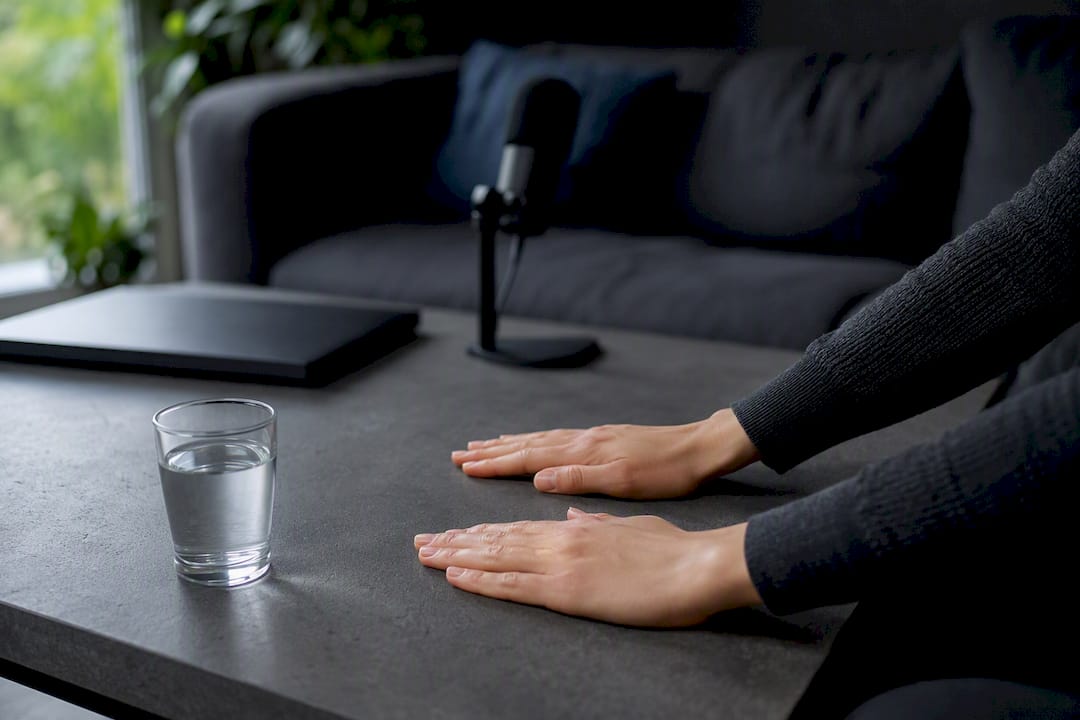
The fastest way to overcome interview anxiety is a three-part system: a five-minute pre-interview routine built on exhale-focused breathing, a small set of rehearsed STAR stories you can retrieve under pressure, and two or three in-interview recovery moves for when your mind goes blank anyway. None of this eliminates nerves. It gives you something to do with them.
You’ll learn:
- A breathing and grounding routine you can run in the parking lot or at your desk
- How to build a story bank so retrieval doesn’t collapse under stress
- Exact phrases to buy time when you blank mid-answer
Expect fewer blank stretches, a steadier voice, and the sense that you have a plan instead of just hoping the nerves stay quiet.
Key Takeaways
Overcoming interview anxiety depends on combining exhale-focused breathing, a few rehearsed STAR stories, and two or three in-interview recovery scripts you can deploy the moment you blank.
| Point | Details |
|---|---|
| Breathe before you speak | Use cyclic sighing (long exhale) right before the interview for a fast physiological reset. |
| Build a small story bank | Rehearse three to six STAR stories with cold-start retrieval drills, not word-for-word memorization. |
| Have a blanking script ready | Repeat the question, pause, or ask to circle back rather than freezing in silence. |
| Debrief within the hour | Write two lines on what worked and what to fix, then set a strict fifteen-minute worry window. |
| Practice with structured feedback | Iterationinterview grades recorded practice answers and drills your specific weak spots between interviews. |
This article is general information, not a substitute for advice from a qualified doctor. Consult a qualified healthcare professional about your own circumstances before acting on anything here.
Table of Contents
- What Does Interview Anxiety Actually Feel Like?
- A Repeatable Five-Minute Pre-Interview Routine
- Why Story Prep Beats Memorizing Answers
- What to Do When Your Mind Goes Blank Mid-Interview
- When Anxiety Needs More Than Breathing Techniques
- The Debrief Ritual That Stops Post-Interview Spiraling
- The Research Behind These Techniques
- Managing Shaky Hands and a Shaky Voice Mid-Interview
- Sources
What Does Interview Anxiety Actually Feel Like?
Interview anxiety shows up in your body before it shows up in your answers. Sweaty palms, a racing heart, a tight chest, and a dry mouth are the usual physical signals. Cognitively, you’ll notice racing thoughts, difficulty concentrating on the question being asked, and the specific horror of blanking on something you knew cold an hour earlier.
That blanking isn’t a character flaw. Under acute stress, your prefrontal cortex, the part of your brain handling working memory and recall, cedes ground to your threat-detection system. You can’t simply “think harder” your way out of it mid-answer, which is why rehearsed structure matters more than raw knowledge.
- Physical: racing heart, sweaty palms, shallow breathing, shaky hands
- Cognitive: racing thoughts, tunnel vision on the question, sudden memory blanks
- Triage: mild nerves that fade once you start talking are normal; anxiety severe enough that you avoid applying or cancel interviews outright is a signal to look at the professional-help section below
A Repeatable Five-Minute Pre-Interview Routine
Run this in your car, a waiting room, or at your desk five minutes before you start.
- Reset your posture. Stand or sit tall, shoulders back, feet flat. Posture changes how much air you can move, and shallow breathing feeds anxiety.
- Breathe with a longer exhale than inhale. Stanford Medicine research found this pattern, called cyclic sighing, cuts physiological anxiety more than box breathing or mindfulness alone. Do two short inhales through the nose followed by one long exhale through the mouth, repeated for one minute.
- Run a 30-second mental script. One line on why you want this role, one line on your best recent win. Say it out loud once.
Use cyclic sighing when you need a fast physiological reset right before you walk in. Box breathing (four counts in, four hold, four out, four hold) works better earlier in the day when you have more time and want steady, even calm rather than a quick jolt down.
If you’re interviewing remotely, check your camera angle and lighting two minutes early, keep water within reach, and mute test your mic. In person, factor in extra travel time so you’re not doing your breathing routine while jogging to the lobby.
Pro Tip: Keep a printed index card with your 30-second script and your three strongest story titles. Reading it once while you wait beats scrolling your phone.
Why Story Prep Beats Memorizing Answers
Trying to memorize responses to every possible question is a losing strategy. It multiplies what you need to retrieve under stress instead of shrinking it. Career-services guidance from UPenn recommends the opposite: build several flexible STAR stories (Situation, Task, Action, Result) that can stretch to cover most behavioral questions, then rehearse retrieving them without memorization.
Each story needs a specific result, ideally a number or concrete outcome, a decision you made under some kind of pressure or ambiguity, and a clear personal action rather than a team accomplishment described in “we.”
- Draft the stories first. Write six, then pick your strongest three to four for a given role.
- Practice cold-start retrieval. Have someone throw you a story cue with no warm-up and time your response to under 90 seconds.
- Add pressure practice. Mock interviews under conditions harder than the real thing build the kind of retrieval resilience that calm rehearsal at home never does.
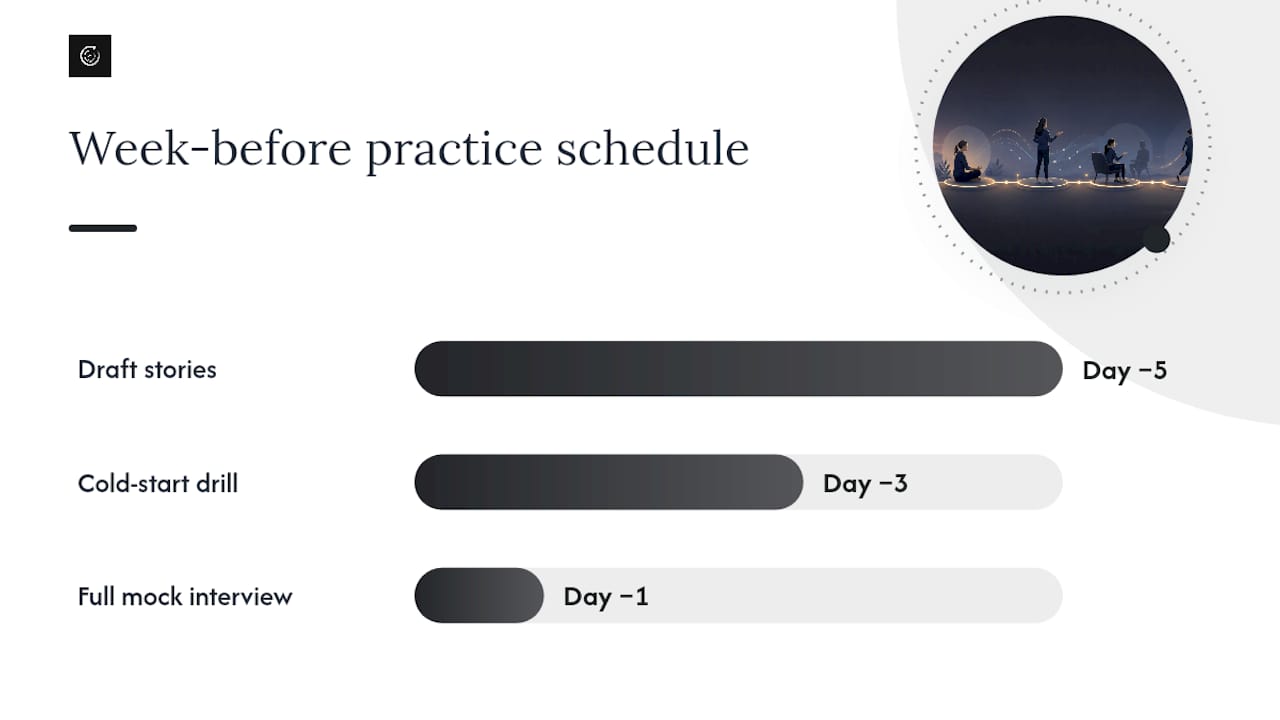
- Run a simple week-before schedule. Draft stories by day five, cold-start drill by day three, one full mock interview by day one.
Pro Tip: Tag each story with two or three question types it answers (conflict, failure, leadership) so you can pull the right one fast instead of freezing on which story fits.
What to Do When Your Mind Goes Blank Mid-Interview
A blank isn’t the end of the interview. It’s a ten-second problem if you have a script ready for it.
Buying time is the first move: repeat the question back in your own words, ask a genuine clarifying question, or simply say “let me take a second to think about that” and take one slow breath before answering. Interviewers expect a beat of silence far more than they expect instant fluency.
- Anchor your body: press your feet into the floor, feel the chair against your back, or use a discreet hand anchor like pressing thumb to finger under the table
- Say the framework out loud: “I’ll walk through the situation, then what I did, then the result” buys you structure while your brain catches up
- If a story genuinely won’t surface, pivot to a shorter, honest version: “The specific example is slipping my mind, but here’s the pattern I’d apply”
- Ask to circle back: “Can I come back to that one in a minute? I want to give you a real answer”
- Use the water glass. A sip buys three to four seconds of legitimate, unremarkable silence
Drexel’s career center specifically recommends repeating the question and using deliberate pauses as standard interview tactics, not just anxiety fixes. Practiced interviewers use these moves even when they’re not nervous, because they buy processing time for anyone.
When Anxiety Needs More Than Breathing Techniques
Some anxiety needs more than a breathing routine. If you’re avoiding applying to jobs altogether, canceling interviews you’ve already landed, or experiencing anxiety that doesn’t ease once you start talking, that’s a different problem than pre-interview jitters.
PsychHub’s clinical guidance points to cognitive behavioral therapy and gradual exposure therapy as evidence-based options for anxiety that interferes with your ability to job search at all, and notes that workplace accommodations exist for documented anxiety disorders during the hiring process itself.
- Signs worth addressing with a professional: panic attacks, physical avoidance of applying, anxiety that doesn’t fade once the interview starts
- If panic hits mid-interview, know that attacks generally peak within ten minutes and ease within thirty; focus on your exhale, name three things you can see, and if needed, ask for a short bathroom break to reset
- A brief, honest script works: “Would it be alright if I grabbed a glass of water?” costs you nothing
The Debrief Ritual That Stops Post-Interview Spiraling
The interview isn’t over when you leave the room. What you do in the next hour shapes how much you learn and how much you ruminate.
- Write two lines immediately: one thing that went well, one thing to fix next time.
- Set a worry window, fifteen minutes, tops, then schedule one concrete next action (a follow-up email, a specific drill) and close the loop mentally.
- Log the pattern. If you blanked on the same type of question twice, that’s a story tag to fix, not a personal failing.
The Research Behind These Techniques
Four things drive reliable interview performance: physical regulation (breathing that calms your body), cognitive reappraisal (reframing nerves as energy instead of threat), retrieval-under-stress practice (rehearsing recall, not just content), and external anchors (notes, scripts, or a coach’s feedback) for when retrieval fails anyway.
- Stanford’s cyclic-sighing study backs the breathing piece specifically over box breathing or mindfulness alone
- UPenn Career Services backs reframing and structured story prep
- Drexel’s Steinbright Career Development Center backs pressure practice and in-interview pacing tactics
The four pieces work together, not separately. Breathing calms your body, but it won’t hand you a story you never rehearsed. Practiced retrieval fails less often, but you still need an anchor for the times it does.
Iterationinterview’s AI grading and transcript reviews sit inside that fourth piece: targeted drills built from your actual weak answers give you a form of external anchor and rehearsal that generic practice questions don’t.
Managing Shaky Hands and a Shaky Voice Mid-Interview
Physical symptoms don’t wait for a convenient moment. Shaky hands, a wobbly voice, or a flushed face can show up right as you’re trying to sound confident, and fighting them directly usually makes them worse.
For shaky hands, keep them occupied with something purposeful. Rest them flat on the table or hold a pen; stillness paired with a task gives your hands something to do besides tremble visibly. If you’re gesturing, use smaller, deliberate movements rather than trying to suppress motion entirely, which tends to create more visible tension, not less.

Voice modulation is largely a breath problem. A shaky or high voice usually means shallow breathing from the chest instead of the diaphragm. Before you answer a tough question, take one slow breath low into your stomach, then start your sentence slightly slower than feels natural.
Sweaty palms are worth planning for before a handshake: keep a tissue or handkerchief in your pocket, and a quick, casual wipe on your pants before you extend your hand solves the problem without drawing attention to it. If your face flushes easily, a splash of cool water on your wrists in the restroom before you walk in can take the edge off.
None of these symptoms disqualify you. Interviewers notice confidence in how you recover, not whether your hands shook once.
A Note on Normalizing the Nerves
Anxiety before an interview is performance energy with nowhere to go yet. Treat it as fuel, not failure. Small, repeated exposure, one mock interview at a time, is what actually rewires the response. Build the reps.
— Iteration
Turn Practice Into a System, Not Just Repetition
Rehearsing alone only gets you so far because you can’t grade your own blind spots. Iterationinterview’s AI-powered practice platform grades your recorded answers and flags the specific patterns dragging your interviews down, so you’re fixing the actual gap instead of guessing at it.
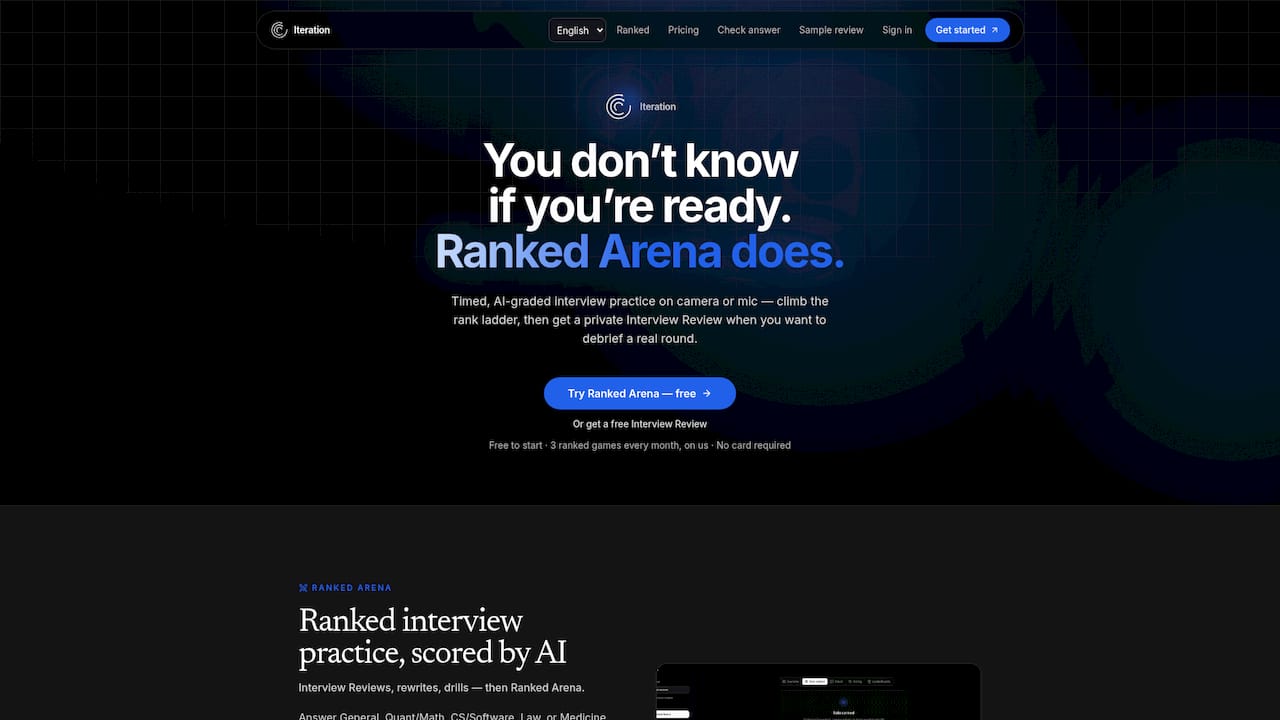
The workflow fits directly into the cold-start drills and pressure practice described above: run a ranked, timed mock interview, get structured feedback on your STAR delivery and pacing, then drill the specific weak spot again instead of re-practicing what’s already solid. If you’ve relied on ChatGPT for feedback before, the platform’s structured grading approach differs in that it tracks your answers over time rather than reacting fresh each time. Paste in a past transcript or a single tough answer and see what the AI catches. Try it now before your next interview.
Sources
- Cyclic sighing can help breathe away anxiety | Stanford Medicine
- Managing interview anxiety | UPenn Career Services
- Job interview anxiety: How to succeed when you have an anxiety disorder | PsychHub
- Coping with interview stress | Drexel Steinbright Career Development Center