Ran: Kurosawa at 75 and 1,400 Costumes, for Film Researchers
Ran: Kurosawa at 75 and 1,400 Costumes, for Film Researchers
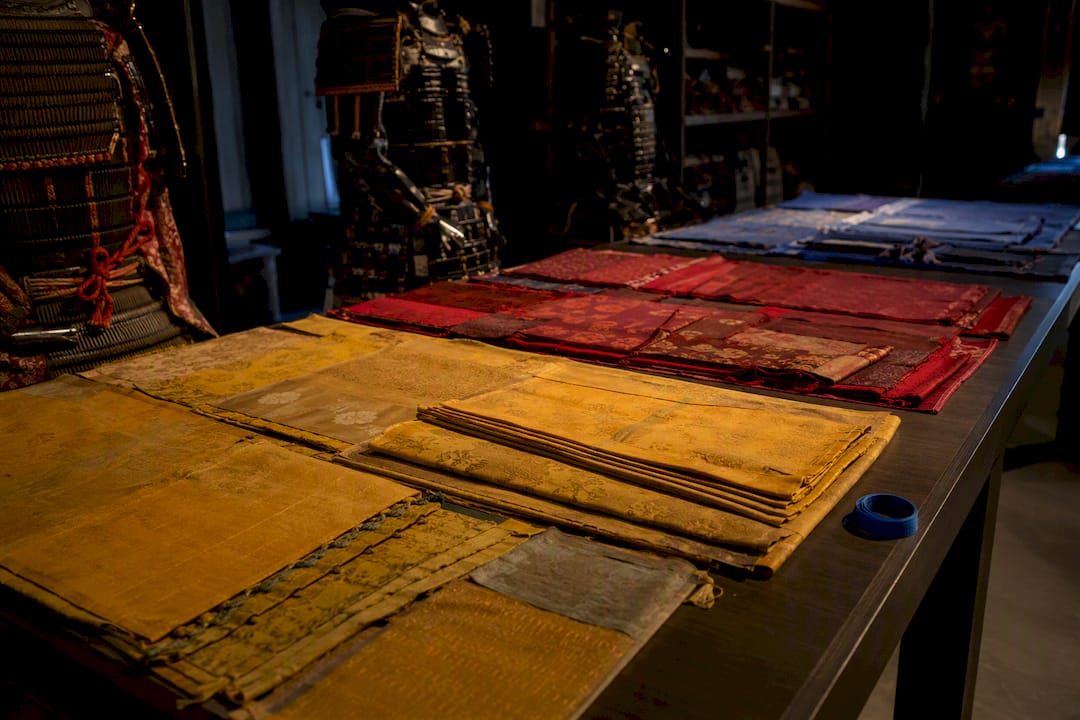
Ran is Akira Kurosawa’s 1985 epic adaptation of William Shakespeare’s King Lear, a late career masterwork celebrated for its visual scale, color design, and tragic retelling of a warlord’s downfall. Kurosawa directed, co-wrote, and edited the film, with Tatsuya Nakadai as the aging lord Hidetora, a score by Toru Takemitsu, and costumes by Emi Wada that won an Academy Award. It’s routinely ranked among Kurosawa’s greatest achievements.
TL;DR:
- The film’s large-scale production involved building almost all sets practically, with 1,400 costumes and around 200 horses used in battles.
- Kurosawa’s meticulous storyboarding and wide, static shots emphasize chaos and fragmenting power, while close attention was paid to color-coded armies for clarity in battles.
- Performances, especially Nakadai’s portrayal of Hidetora’s physical and mental decay, are central to conveying the film’s themes of chaos and the cost of violence.
- Kurosawa’s age and personal experience at the time of filming deepen the film’s reflective tone, especially during Hidetora’s scenes of wandering and madness.
- Critics and awards highlight Ran’s lasting influence, with Emiko Wada’s Oscar-winning costumes and the film’s reputation as a masterful, meditative epic on mortality and consequence.
Table of Contents
- What Happens in Ran: A Chronological Plot Summary
- Cast and Performances That Carry the Tragedy
- How Ran Was Made: Scale, Locations, and Costume Design
- What Ran Is Really About: Chaos, Power, and the Weight of Age
- Critical Reception, Awards, and Ran’s Lasting Influence
- The Craft Behind Ran: Camera, Editing, and Score
- Where to Watch Ran and What Runtime to Expect
- Why Ran Rewards Close, Repeated Study
- Primary Sources for Verifying Ran’s Production and Reception
- Sources
What Happens in Ran: A Chronological Plot Summary
Spoilers follow. If you’re studying Ran for the first time and want to experience the tragedy unfold on screen, save this section for after the credits roll.
Kurosawa builds Ran around a simple, devastating premise: an aging warlord divides his kingdom among his sons and watches the decision unravel everything he built. The plot borrows its bones from King Lear but reshapes the details through the lens of Sengoku period Japan, where clan warfare and succession politics carried their own brutal logic.
- The division of the kingdom. Great Lord Hidetora Ichimonji, ruler of a unified territory built through decades of conquest, announces he will retire and split his domain among his three sons: Taro, Jiro, and Saburo.
- Saburo’s exile. The youngest son, Saburo, warns his father that dividing loyalty among three heirs invites disaster. Furious at what he sees as disrespect, Hidetora banishes Saburo. A loyal retainer, Tango, objects to the banishment and is exiled alongside him.
- The first castle, and the first betrayal. Hidetora moves into Taro’s castle expecting the deference due a retired ruler. Taro’s wife, Lady Kaede, pushes her husband to strip Hidetora of his remaining authority and symbols of rank.
- Rejection and flight. Humiliated, Hidetora leaves for Jiro’s castle, only to find his second son equally unwilling to share power. Turned away from both strongholds he built for his sons, Hidetora and his remaining retainers become wanderers in his own former territory.
- Descent into madness. Cast out into the wilderness with his Fool, Kyoami, and a shrinking band of loyal men, Hidetora’s grip on reality starts to slip. The scenes of him running quickly through burning fields and ruined halls, half in retreat and half unraveling mentally, form the emotional core of the film’s middle act.
- The siege at the third castle. Taro’s and Jiro’s forces turn on Hidetora’s last refuge in a siege sequence that becomes one of the most staged battle scenes in film history. Taro is killed in the chaos, engineered in part by Jiro.
- Saburo’s return. Having heard of his father’s suffering, Saburo returns from exile with an army to rescue Hidetora, reversing his earlier banishment into an act of loyalty that mirrors Cordelia’s role in King Lear.
- The tragic resolution. Jiro’s scheming and Lady Kaede’s thirst for revenge against the Ichimonji clan bring the story to its bloody close. Saburo is killed just as he reaches his father, and Hidetora, broken by grief, dies at his son’s side. The film ends with the blind hermit Tsurumaru, brother of Hidetora’s daughter-in-law Lady Sue, left alone on a ruined battlement as the kingdom collapses into the chaos its title promises.
The correspondences to Shakespeare are close enough to trace scene by scene, but Kurosawa’s changes, especially the shift from daughters to sons and the added weight given to Lady Kaede as an engine of vengeance, give Ran its own distinct moral shape rather than a simple transposition.
Cast and Performances That Carry the Tragedy
The film’s power rests heavily on a small group of performances built around Kurosawa’s exacting direction. The principal cast includes:
- Tatsuya Nakadai as Hidetora Ichimonji, the aging warlord
- Akira Terao as Taro, the eldest son
- Jinpachi Nezu as Jiro, the second son
- Daisuke Ryu as Saburo, the youngest son
- Mieko Harada as Lady Kaede, Taro’s wife
- Yoshiko Miyazaki as Lady Sue, Jiro’s wife
- Mansai Nomura as Kyoami, Hidetora’s Fool
- Peter (Shinnosuke Ikehata) in the Fool role in some listings, with Nomura credited as Kyoami’s actor in the film’s cast records available on Letterboxd
Nakadai’s performance anchors the entire film. He plays Hidetora’s transformation from an imperious conqueror into a hollowed out, wandering old man almost entirely through physical collapse: his posture folds inward, his voice cracks, and his eyes lose focus long before his mind does. Nakadai reportedly drew on Noh theater conventions for the character’s descent into madness, giving Hidetora’s breakdown a stylized, almost ritual quality rather than naturalistic grief.
Mieko Harada’s Lady Kaede is the film’s other great performance, a portrait of calculated vengeance that gives Ran a villain with clearer motive than anything in Shakespeare’s original. Kurosawa expanded the Fool’s role well beyond its Shakespearean counterpart, using Kyoami as both comic relief and moral commentator who often says aloud what other characters can only suffer silently.
Pro Tip: Watch how Kurosawa blocks actors in wide shots rather than cutting to close-ups during emotional peaks. He often let performances play out in full-body framing, forcing actors to communicate through movement and posture rather than facial expression, a technique worth studying if you want to understand his directing style.
How Ran Was Made: Scale, Locations, and Costume Design
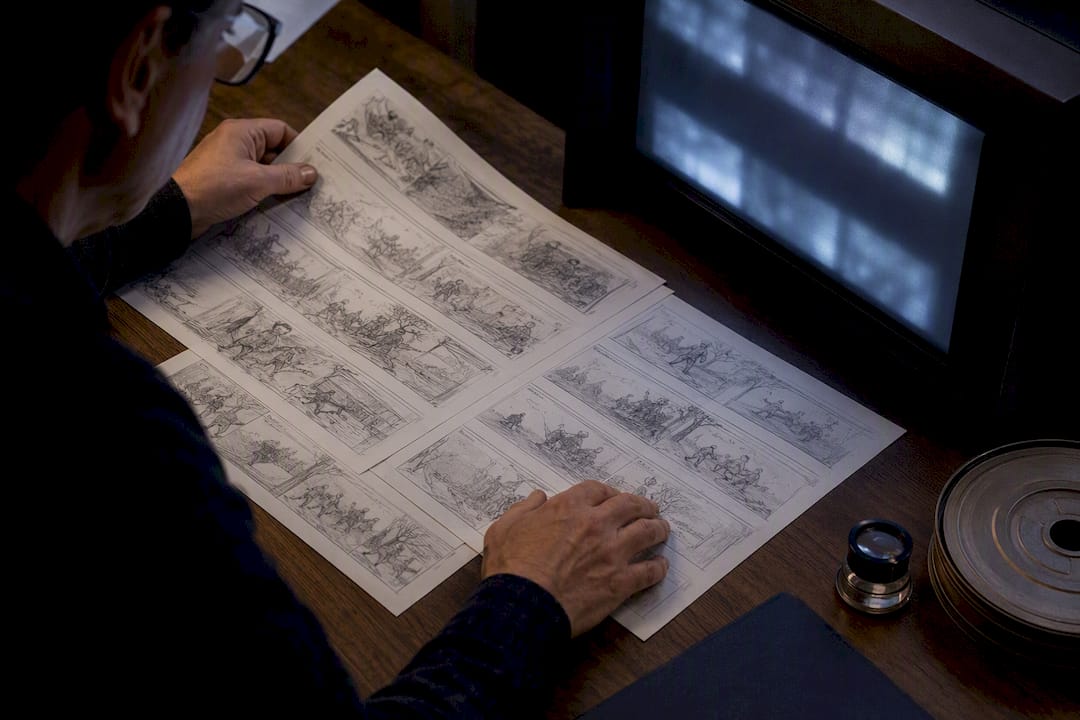
Kurosawa didn’t rush Ran into production. The project traces back decades to his fascination with the story of Mōri Motonari, a 16th century Japanese lord whose three sons famously stayed loyal to their father and to each other, according to Wikipedia’s production history. Kurosawa later folded in the thematic architecture of King Lear, producing a hybrid origin that explains why Ran’s sons behave so differently from Shakespeare’s daughters. He spent years developing the project and painted storyboards for nearly every shot in the film before cameras ever rolled, a level of previsualization that shaped the finished movie’s tightly controlled compositions.
The production numbers back up the film’s reputation for scale:
- Budget: an estimated $11 to $12 million, financed as an international co-production between Japanese and French backers
- Costumes: roughly 1,400 individually designed pieces, created under Emi Wada’s direction
- Horses: around 200 used in battle and procession sequences
- Filming locations: the slopes of Mount Aso in Kumamoto Prefecture, along with location work near Kumamoto Castle and Himeji Castle, whose imposing white walls became a visual template for the fictional Ichimonji strongholds
- Release: premiered at the Tokyo International Film Festival in a preview on May 31, 1985, with general release in Japan on June 1, 1985
By the numbers: Ran’s $11 to $12 million budget covered a production built almost entirely from practical elements, full scale castle sets constructed for burning, hundreds of extras in period armor, and real horses rather than special effects substitutes.
Kurosawa built the third castle set from scratch specifically so it could be burned down during the siege sequence, refusing to rely on miniatures for the film’s most demanding scenes. That decision meant the fire in that battle is largely real, filmed with a level of practical risk that would be unusual on most modern productions.
Emi Wada’s costume work earned the film its only Academy Award, taking home the Oscar for Best Costume Design. Her designs used color as a character coding system: the sons and their armies are each associated with a distinct palette (yellow for Taro, red for Jiro, blue for Saburo), letting audiences track allegiance and chaos at a glance even in the film’s most crowded battle scenes. Beyond Wada, the production drew on a large crew of Japanese and international collaborators to manage a shoot that stretched across multiple regions and required coordinating hundreds of extras alongside the horses and full scale sets.
What Ran Is Really About: Chaos, Power, and the Weight of Age
The Japanese title, 乱 (ran), translates roughly to “chaos” or “tumult,” and Kurosawa builds the entire film around that idea rather than treating it as decoration. Several themes run through the narrative:
- The cost of a life built on violence. Hidetora’s downfall is framed less as a personal betrayal by his sons and more as karmic consequence for a kingdom he built through slaughter decades earlier.
- Madness as clarity, not just collapse. Hidetora’s descent into apparent insanity strips away his authority but also exposes truths about his sons and his own past that his sanity had let him ignore.
- Generational betrayal as inheritance. Taro and Jiro don’t invent cruelty. They inherit it, and Lady Kaede’s revenge plot suggests the entire clan’s violence simply gets passed forward until someone absorbs the full cost.
- The failure of division. Splitting power three ways doesn’t distribute stability; it multiplies the opportunities for betrayal, a structural point Kurosawa makes visually through the film’s fractured battle geography.
Mapped against King Lear, the correspondences are direct but not exact. Hidetora is Lear. Saburo, exiled for honesty and returning to rescue his father, plays Cordelia’s role. Taro and Jiro split the treachery that Goneril and Regan carry alone in Shakespeare’s text. The biggest structural shift is Lady Kaede, who has no direct Shakespearean equivalent and instead absorbs and redirects the entire play’s undercurrent of female rage into an active, plot driving force. Kurosawa also strips out Lear’s subplot involving Gloucester and his sons almost entirely, folding pieces of that betrayal narrative into Tsurumaru and his sister Lady Sue instead.
Visually, Kurosawa uses color and staging to reinforce the theme of fragmentation. Wide shots of massed armies in yellow, red, and blue create a chessboard effect where the audience can read the collapse of unified power just by watching the colors bleed into each other during combat. Intimate scenes, by contrast, strip color down almost entirely, isolating Hidetora in muted tones that mirror his psychological isolation from the world he once commanded.
Roger Ebert’s contemporary review argued that Kurosawa’s age at the time, 75, was not incidental to the film’s power but essential to it. Ebert’s reading holds that only a director who had lived long enough to feel the weight of his own choices could handle Lear’s central paradox: a man who built an empire and then discovers, too late, that the empire was never worth what it cost him.
Ebert’s review of Ran frames the film’s emotional authority as inseparable from Kurosawa’s own age and life experience, suggesting a younger director couldn’t have brought the same weary clarity to Hidetora’s unraveling.
That reading gives the film’s slower, more meditative stretches, the scenes where Hidetora simply wanders, unable to reconcile who he was with what he’s become, a gravity that a more youthful or plot-driven adaptation might have skipped past.
Critical Reception, Awards, and Ran’s Lasting Influence
Ran was expensive, ambitious, and by most accounts, a triumph on release, though its road to the screen took years longer than Kurosawa’s earlier films. Critics recognized almost immediately that Kurosawa had produced something rare: a historical epic with the emotional density of chamber drama.
- Awards: Emi Wada won the Academy Award for Best Costume Design, and Kurosawa himself received an Academy Award nomination for Best Director, an unusual honor for a foreign language film at the time.
- Festival premiere: Tokyo International Film Festival, with a preview screening on May 31, 1985.
- Critical standing: Ran is widely regarded as one of Kurosawa’s greatest late career achievements and appears regularly on lists of the most significant films in world cinema.
- Budget context: against its estimated $11 to $12 million budget, Ran’s international co-production structure, spanning Japanese and French financing, was itself a notable model for how aging auteurs secured funding for large scale projects outside the Hollywood studio system.
Legacy marker: decades after release, Ran still shows up in serious conversations about the greatest films ever made, a durability that separates it from most historical epics of its era.
Reassessment over the following decades only strengthened the film’s reputation. Where some 1985 reviews focused on the sheer spectacle, an aging master commanding one of the largest productions in Japanese film history, later criticism increasingly treats Ran as a meditation on mortality and consequence that happens to be dressed in spectacular armor and burning castles. The film’s influence shows up in the visual grammar of later historical epics that borrow its color coded factions and its willingness to hold wide shots on chaos rather than cutting away for clarity.
The Craft Behind Ran: Camera, Editing, and Score
Ran’s technical execution matches its ambition, and much of that comes down to Kurosawa’s own hands-on control over multiple departments at once.
- Cinematography: the film’s camera work favors wide, often static shots that let the massed armor and color coded armies compose themselves within the frame, a deliberate choice that treats battle scenes almost like moving paintings rather than fast-cut action.
- Editing: Kurosawa edited the film himself, a role he took on for most of his late career work, giving him direct control over pacing decisions that stretch out quiet scenes of Hidetora’s wandering against the brutal compression of the siege sequence.
- Storyboards: as noted in the production section, Kurosawa’s practice of painting detailed storyboards for nearly every shot meant that much of the film’s visual rhythm was locked in years before filming began.
- Score: Toru Takemitsu composed Ran’s music, drawing explicitly on the symphonic language of Gustav Mahler to give the film’s tragedy an orchestral weight rarely heard in Japanese cinema of the period.
- Music and pacing: Takemitsu’s score often plays against the visual chaos rather than underscoring it directly, a technique that lets silence and restrained strings carry scenes that could easily have tipped into melodrama.
Together, these choices support the film’s central paradox: a story about the collapse of order told through some of the most rigorously ordered filmmaking of Kurosawa’s career.
Where to Watch Ran and What Runtime to Expect
Ran runs 162 minutes and was released in Japan on June 1, 1985, following its Tokyo International Film Festival preview.
- Best transfers: Criterion Collection releases of Ran are generally considered the reference standard for picture and sound quality among home video editions.
- Availability: streaming access varies by region and rotates over time, so checking current listings before assuming availability is worthwhile.
- Cast and credit verification: Letterboxd’s Ran page offers a useful quick reference for full cast listings and viewer ratings if you need to double check a credit.
- What to prioritize: seek out a restored transfer over an older DVD edition whenever possible. The color work that Emi Wada and Kurosawa built the film around loses significant impact on a poor transfer.
Why Ran Rewards Close, Repeated Study
Ran earns its reputation as one of the richest films you can study for craft, not just story. The storyboards Kurosawa painted years before production give researchers a rare window into how a director translates a vision onto paper before a single frame is shot. Pulling up a restored transfer alongside those storyboards, when accessible through film archives or Criterion supplements, shows how closely the finished compositions match his original sketches.
If you’re studying Ran seriously, don’t settle for a single viewing or a single transfer. The color coding, the staging of mass battle versus intimate grief, and the editing rhythm all reward a second and third pass, ideally on the best available print. Treat it the way you’d treat any dense text you’re trying to master: slow down, take notes, and go back to the source material rather than someone else’s summary of it.
Primary Sources for Verifying Ran’s Production and Reception
Researchers citing Ran in academic or critical work should lean on a small set of reliable sources rather than secondhand summaries.
- Wikipedia’s Ran entry is the strongest single source for production credits, release dates, runtime, budget figures, and award facts.
- Roger Ebert’s review offers a contemporary critical framework, particularly useful for understanding how the film was read at release and why Kurosawa’s age mattered to that reading.
- Letterboxd’s Ran page works well for quick cast verification and gauging how audiences discuss the film today, though it’s a supplementary source rather than a primary one for scholarly claims.
Cross-checking these three against each other covers most of what a citation-ready summary of Ran requires, from hard production numbers to interpretive framing.