Second Interview Preparation: A 48-Hour Playbook
Second Interview Preparation: A 48-Hour Playbook
Treat round two as a decision-making conversation, not a callback. Debrief your first interview within 24 hours, research the specific people you’ll meet, rebuild your stories with stronger evidence, and rehearse out loud before you walk in.
Next 24 hours:
- Write down every question from round one and how you answered it.
- Identify the two or three interviewers you’ll meet and skim their LinkedIn profiles.
- Draft one new STAR story with a number attached to the result.
Next 48 to 72 hours:
- Research the company’s latest news, product launches, or earnings commentary.
- Run one timed mock interview and record yourself.
- Prepare three questions unique to each interviewer’s role.
Copy this into your calendar now: “Debrief, research, rebuild one story, mock interview, repeat.”
Key Takeaways
Second interview success comes down to converting broad first-round claims into specific, measurable proof tailored to each interviewer you’ll meet.
| Point | Details |
|---|---|
| Debrief within 24 hours | Document every first-round question and flag topics the interviewer returned to repeatedly. |
| Research beyond the About page | Pull three current priorities from recent news, earnings calls, or product announcements. |
| Rebuild STAR stories with metrics | Add exact numbers, tools, and named collaborators to every story you reuse from round one. |
| Tailor questions by interviewer | Prepare one specific question and one story for each person on the panel. |
| Practice under a timer | Use scored practice tools like Iterationinterview to catch filler words, pacing issues, and missing metrics before the real interview. |
Table of Contents
- Why Second Interview Preparation Looks Nothing Like Round One
- What to Expect: Formats, Timelines, and Super Days
- Debrief Your First Interview Before You Do Anything Else
- Research the Company Like You Already Work There
- Know Who’s Interviewing You Before They Walk In
- Build STAR Stories That Actually Hold Up Under Follow-Up
- Preparing for Technical Deep-Dives, Case Studies, and Work Samples
- Ask Questions That Prove You’ve Been Paying Attention
- Run Timed Mock Interviews and Rehearse the Follow-Up
- Logistics, Attire, and the Follow-Up That Actually Matters
- How Structured, Scored Practice Speeds Up Second Interview Readiness
- My 72-Hour Playbook Before Round Two
- Polish Your Answers Before the Panel Does It For You
- Frequently Asked Questions
- Sources
Why Second Interview Preparation Looks Nothing Like Round One
Round one filters out people who can’t do the job. Round two decides who gets the offer, and that shift changes everything about how you should prepare. Interviewers stop asking “can you do this?” and start asking “will you do this well here, with us, starting now?”
You’ll likely meet a mix of people: the hiring manager (checking judgment and fit), peers (checking collaboration), a skip-level or director (checking strategic thinking), and sometimes senior leadership (checking polish and vision). Each one is grading you against a different rubric, even when they ask a similar question.
Three shifts separate candidates who advance from those who stall out:
- From broad to specific. Vague competency claims stop working; interviewers want a name, a date, a number.
- From claims to proof. “I’m good at stakeholder management” needs a story with a difficult stakeholder in it.
- From interested to ready. You’re now expected to speak like someone who has already thought about the first 90 days.
Pro Tip: The single biggest mistake candidates make is repeating their first-round answers word for word. Interviewers compare notes. Give every story new depth: a detail you left out, a metric you calculated since, a lesson you’ve since applied.
What to Expect: Formats, Timelines, and Super Days
Second rounds take several shapes, and each one tests something different. A one-on-one with the hiring manager usually digs into fit and decision-making. A panel interview puts three to five people in a room to compare notes on the spot. A presentation or case study simulates the actual job. A Super Day stacks all of it into one exhausting stretch.
According to Columbia’s career education office, a Super Day typically consists of back-to-back interviews running 30 to 60 minutes each, sometimes with a technical case study or a group meal folded in, and it can eat up an entire day. Super Days are often scheduled shortly after the initial screening, which means you may have very little runway to prepare.
Format tells you what’s being tested:
- A lunch or informal tour signals a culture check. Watch how you talk about past coworkers.
- A presentation or whiteboard session signals a role simulation. Structure matters as much as content.
- A rapid string of one-on-ones signals a consensus-building process. Consistency across your answers counts.
Quick timeline note: block out more time than you think you’ll need, confirm the format with the recruiter in advance, and ask directly whether a decision timeline has been set so you know when to follow up.
Debrief Your First Interview Before You Do Anything Else
Your first interview left a paper trail. Use it before it goes cold.
- List every question you were asked, in order, while the details are fresh.
- Write down how you actually answered, not how you wish you’d answered.
- Flag any topic the interviewer circled back to. Returned topics are the clearest signal of what they still need convincing on.
- Map each question to the competency behind it (leadership, conflict resolution, technical depth, ownership).
- List two new story ideas for each competency, so you’re not reusing material in round two.
This routine works because your first interviewer’s questions are a preview of what the panel already knows and doesn’t yet trust. According to Indeed’s guidance on second interviews, reviewing first-round notes is one of the highest-leverage steps candidates skip.
From your debrief, build a short punch list:
- Facts you need to verify (numbers, dates, team names) before you repeat them.
- Weak answers that need a stronger example swapped in.
- Any question you fumbled that’s likely to resurface, phrased differently.
Research the Company Like You Already Work There
The About page tells you what the company wants you to believe. Recent news, earnings calls, and product announcements tell you what’s actually happening. Check press releases from the last quarter, any public product roadmap updates, recent LinkedIn posts from the leadership team, and patterns in Glassdoor reviews (not the extremes, the repeated themes).
Build a one-page research worksheet with four sections:
- Three current priorities, pulled from recent public statements.
- Recent changes, like a leadership hire, a pivot, or a new market entry.
- Performance signals, such as funding news, layoffs, or growth announcements.
- Known pain points, gathered from reviews, job postings that keep getting reposted, or customer complaints you can find publicly.
Every item on that worksheet becomes raw material. A recent product launch becomes a talking point about where you’d add value. A leadership change becomes a smart, specific question. A repeated Glassdoor complaint about workload becomes something you probe gently, not something you ignore.
Know Who’s Interviewing You Before They Walk In
Ask the recruiter for names ahead of time. Most will share them, and it’s a reasonable thing to request. Once you have names, look up each person’s LinkedIn: their tenure at the company, what team they sit on, and anything they’ve posted publicly in the last few months.
Interviewer type changes what they’re listening for:
- Peers care whether you’ll make their day-to-day easier or harder.
- Managers care whether you’ll need heavy oversight or can run with ambiguity.
- Directors and senior leaders care whether your thinking scales beyond your immediate role.
For each person, prepare one tailored question and one tailored example. A peer gets a question about team workflow and a story about smooth collaboration. A director gets a question about strategic priorities and a story that shows judgment under ambiguity.
Build STAR Stories That Actually Hold Up Under Follow-Up
First-round STAR answers can survive on a good headline. Second-round STAR answers get picked apart, so they need real structure underneath.
Use this shape: Situation (context in two sentences, no more), Task (what you were specifically responsible for), Action (the actual steps, tools, and decisions, including trade-offs you weighed), Result (a number or a verifiable outcome), and a closing line that ties the story back to what this role needs.
The Muse’s guidance on second interviews makes the point clearly: round-two behavioral questions are designed to test real scenarios, so answers need to be specific and past-tense, not hypothetical. If your first-round answer was “I led a project that improved our process,” round two needs the name of the process, the tool you used, who you collaborated with, and the exact percentage or dollar figure that changed.
Here’s an annotated example for a “tell me about a time you managed conflicting priorities” question:
Prepare at least two story variants per core competency, so you’re never forced to reuse the exact same example with two different interviewers who might compare notes afterward.
Pro Tip: When an interviewer asks “why that approach?” or “what would you do differently?”, that’s not a trick question. It’s an invitation to show reasoning. Answer it directly, then add one sentence about what you’d change with hindsight. That layer of self-awareness reads as maturity, not weakness.
Preparing for Technical Deep-Dives, Case Studies, and Work Samples
Role-specific rounds reward structure over improvisation. A case study rewards a clear framework applied consistently. A coding challenge rewards clean reasoning out loud, not just a correct answer. A product critique rewards specific, prioritized feedback rather than a list of everything you’d change. A portfolio review rewards a tight narrative about why each piece is included.
Work-sample checklist:
- Confirm scope and time limit with the recruiter beforehand.
- Ask what audience you’re presenting to, since that changes the level of detail.
- Rehearse out loud with a timer, not just in your head.
- Bring a backup: printed copies, an offline file, a charged laptop.
For any on-the-spot presentation or whiteboard question, structure your answer as: problem, approach, evidence, recommendation. State the problem in one sentence, walk through your approach, back it with a data point or example, and end with a clear recommendation. If you’re asked about your first months on the job, bring a one-page 30-60-90 outline. Career advisors consistently recommend it as a way to show you’ve already thought past the interview itself, according to Columbia’s career center.
Ask Questions That Prove You’ve Been Paying Attention
Generic questions (“what’s the culture like?”) waste your best chance to stand out. Build a short bank tailored to each interviewer type:
- For peers: “What’s the most frustrating part of the current workflow on this team?”
- For managers: “What does success look like in this role after the first six months, specifically?”
- For directors: “How is this team’s priority shifting given [specific recent company news]?”
- For HR or recruiters: “What’s caused the last two hires in this role to succeed or not work out?”
The goal is to ask something that invites the interviewer to reveal a real pain point, then quietly position your background as the answer to it. Robert Walters’ guidance on second interviews frames this well: treat the round as a bilateral decision, not a one-way audition, and use your questions to evaluate the role as seriously as they’re evaluating you. Close with something that signals genuine interest: “Based on what you’ve described, this sounds like a strong match for how I like to work. What are the next steps?”
Run Timed Mock Interviews and Rehearse the Follow-Up
A story you’ve never said out loud will sound worse than you think in the real room. Set up a mock-interview plan with a friend, mentor, or a tool like Iteration, and structure it in rounds.
- Run a 20 to 30 minute timed round for each interviewer type you’ll face (peer, manager, director).
- Record every round, even if it feels awkward.
- Immediately after, spend 15 minutes listing what worked and what didn’t.
- Rebuild one weak answer before your next mock session.
Prepare for common follow-up probes: “Why that approach and not another one?” “What would you have done with more time or budget?” “How did the other person react?” These questions test whether your story is real or rehearsed on the surface only.
When you play back a recording, listen for three things specifically: filler words that creep in under pressure, missing metrics where you got vague, and weak transitions between the STAR steps. Scored or AI-based feedback tends to be most useful here, since it catches pacing and consistency issues that are hard to hear in your own head while you’re talking.
Logistics, Attire, and the Follow-Up That Actually Matters
Small failures here cost more in round two, because expectations are higher.
- Confirm the exact format and location the day before, including whether it’s virtual or on-site.
- Test your camera, microphone, and internet connection at least an hour ahead if it’s remote.
- Pack backups: a charged phone, a printed resume, a portable battery.
- Dress slightly more formally than the stated dress code, then adjust once you see the office culture in person.
Send a short thank-you note within 24 hours to each interviewer individually, referencing one specific detail from your conversation with that person rather than a generic template. If you haven’t heard anything after the timeline they gave you, one polite follow-up email is appropriate. Don’t send a second one before that window closes.
How Structured, Scored Practice Speeds Up Second Interview Readiness
Reading advice is one thing. Hearing yourself answer under a clock is another. Iterationinterview runs timed, on-camera or mic practice sessions and grades your responses with structured, AI-based feedback, so you can see exactly where an answer loses specificity or drags on too long.
Upload a full transcript from your first interview or a single answer you’re worried about, and the platform flags weak spots: missing metrics, vague language, and pacing issues. Then it builds targeted drills around your specific gaps instead of generic questions.
Pro Tip: Run one scored practice session per competency you plan to cover in round two, then re-record the weakest one 24 hours later. Improvement compounds fastest with a short gap between attempts, not a single marathon session.
Recorded practice sessions and transcripts stay tied to your account for your own review and improvement tracking, not shared externally.
My 72-Hour Playbook Before Round Two
Day one: Debrief round one for an hour. Spend 90 minutes researching the company and interviewers. Draft two new STAR stories.
Day two: Run a 45-minute timed mock interview. Spend 30 minutes triaging the recording for filler words and missing numbers. Spend 15 minutes refining your questions.
Day three: One light run-through in the morning, then stop. Don’t cram new material the night before.
Pro Tip: Confidence the morning of comes from repetition, not last-minute cramming. Do something physical the night before, sleep on schedule, and trust the work you already put in.
Polish Your Answers Before the Panel Does It For You
A recruiter can tell you what to expect. A mentor can tell you what worked for them. Neither can tell you, in real time, that your STAR answer just ran 90 seconds too long or skipped the metric that would’ve made it land. That’s the gap Iterationinterview closes: timed, on-camera or mic practice graded automatically, with feedback built around your actual weak spots instead of generic tips.
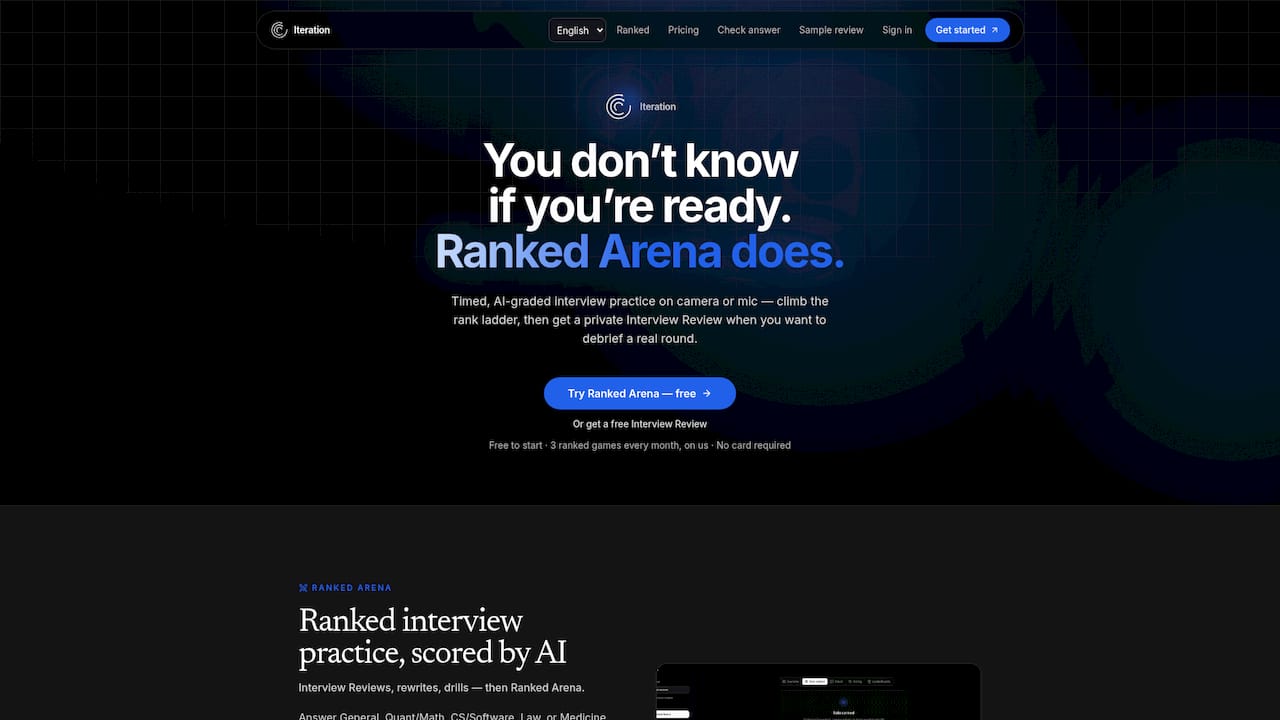
Before your second interview, run three sessions: one rebuilding your weakest STAR story with a number attached, one timed practice round simulating the format you’re expecting (panel, one-on-one, or presentation), and one transcript review of your first interview to catch what you should fix before it repeats. Candidates using this kind of structured, scored practice tend to see faster gains in specificity, pacing, and confidence than reading advice alone provides.
Start with the free trial and paste in your last interview transcript or a single answer you’re unsure about. See what the grading flags, fix it, and walk into round two with proof instead of a rehearsed script.
Frequently Asked Questions
What’s the biggest difference between first and second interview questions? First-round questions test whether you can do the job. Second-round questions test whether you’ll do it well in this specific team, with specific proof replacing general claims.
How long should I prepare for a second interview? Give yourself at least 48 to 72 hours if possible: one block for debrief and research, one for rebuilding stories, and one for timed practice.
Should I reuse my first-round answers in the second interview? No. Repeating the same answers word for word is one of the most common mistakes; add new detail, a metric, or a lesson you’ve applied since.
What if I don’t know who’s interviewing me in round two? Ask the recruiter directly for names ahead of time. Most will share them, and it lets you tailor a question and example for each person.
How soon should I follow up if I haven’t heard back? Wait until the timeline the interviewer gave you passes, then send one polite follow-up email. Avoid sending a second one before that window closes again.
Sources
- You Got a Second Interview! Now What? | Columbia Career Education
- Second interview questions: what to expect and how to prepare | Robert Walters
- Second interview questions and answers | The Muse
- How to succeed at your second interview | Indeed